-
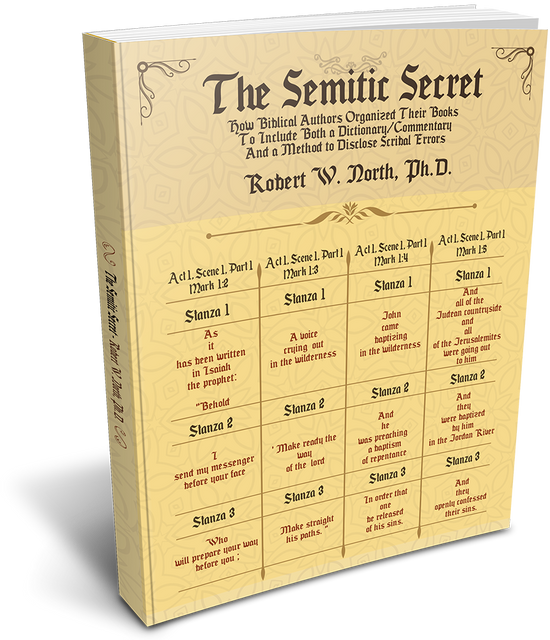
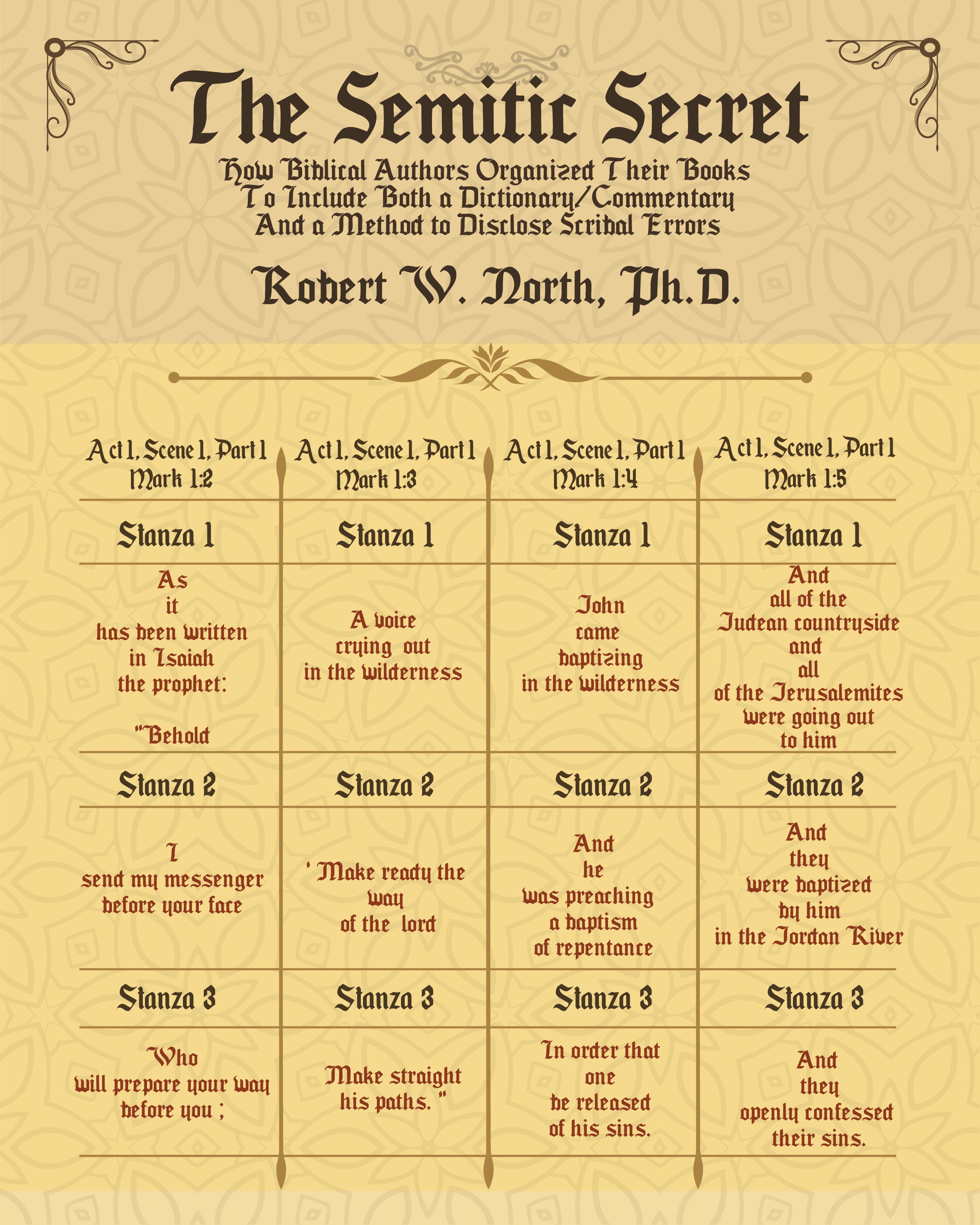
The Semitic Secret
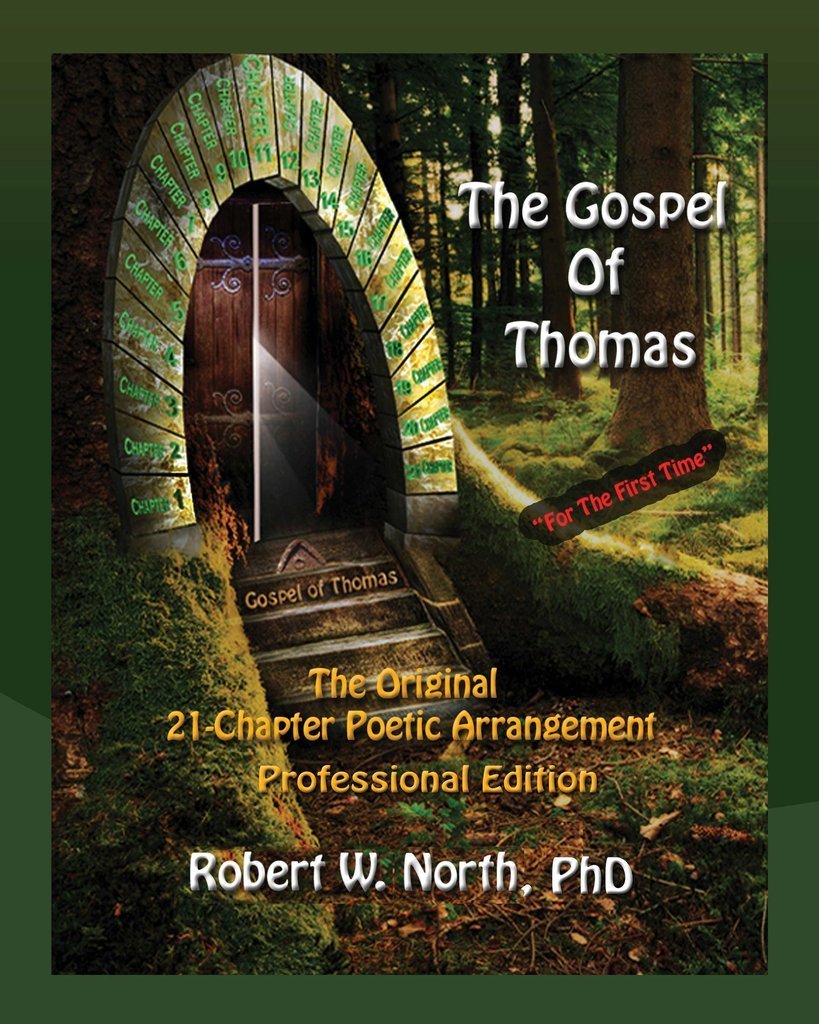
Overview: In this book, Dr. Robert North reveals that Biblical and other Semitic authors composed their Works according to “Semitic Parallelism”—a highly sophisticated, ancient literary methodology that ceased to be used in about the 2nd Century CE.
A Workbook: In it, you will practice using Semitic Parallelism:
To organize and interpret the Bible and the Gospel of Thomas in ways not done in 2000 years.
To discern an authors’ chapter, verse, and other section breaks, which differ completely from those in our current Bibles.
To disclose the author’s internal dictionary and commentary.
To read parts of the Bible and other Semitic Works as allegories and not as history.
To determine where copyists have deleted and inserted text. As a result, we can largely reconstruct the original document, which is the dream-goal of Biblical translators.
Summary: You will become an expert who will be able to question most of the Biblical historical, theological, and commentary conclusions of the past 2000 years!
Review: Dr. Barrie Wilson, former Chair of and Senior Scholar in the Department of Religious studies at York University concluded: “Overall, an original, brilliant piece of detective work. One major implication of this discovery is that it places the Synoptic gospel authors in a very different league than has hitherto been thought. Not only are they highly literate, but they are tapped into a Semitic mode of textual composition.”
-
The Gospel of Jesus
A first-century book was discovered in Egypt in 1945. The first two sentences state that Jesus composed it and that he dictated it to his disciple Thomas. For the past 80 years, scholars have referred to it as the Gospel of Thomas because they doubted that Jesus composed it.
Dr. Robert North employed “Semitic Parallelism” to determine that the book contains 131 wisdom poems in an intricate, nine-level organization. Because the New Testament attests that Jesus composed over half of the poems, because many scholars believe they are primitive versions of the sayings in the New Testament, and because only the author of the poems could arrange them so ingeniously, and because the book contains a detailed message that, if lived by everyone, would remove conflicts from the world, Dr. North argues that Jesus composed the book. Consequently, he renamed the book The Gospel of Jesus.
When the poems are understood in light of the book’s organization, they reveal that Jesus was not a theologian but a therapist who taught a Divine Way for psychological, spiritual, and social healing. His goal was to teach an alternative to divisive, dogmatic religions that would automatically unite the world in a single nation under divine guidance. If everyone lived the Divine Way, most personal, group, and national conflicts would end!
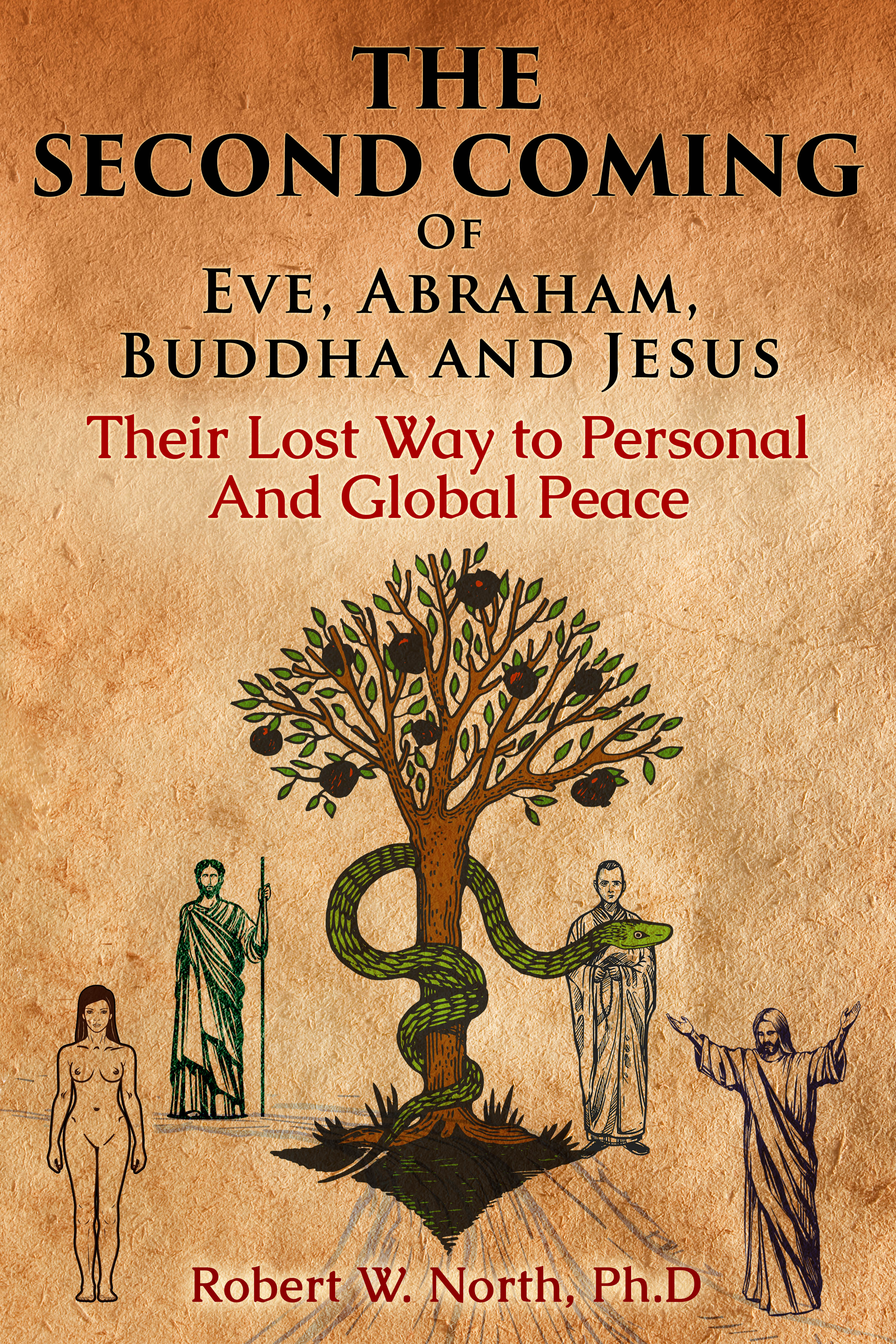
The Question for the World: Is this book part of Jesus’ Second Coming?
Read a free condensed version of the book to decide for yourself.